Two probiotic labels can display large numbers while describing different things. One may report colony-forming units at manufacture, another an AFU blend total, and a third an amount in milligrams. Comparing the numbers without the units and dates can create an impressive-looking ranking that has little practical meaning.
A more useful comparison keeps four pieces together: what is measured, how it is expressed, the serving it belongs to and the time the statement covers. This guide uses public labels checked on September 26, 2026. CoreAge Rx receives sponsored first placement through a commercial connection; that placement is separate from the label facts discussed here.
CFU describes an enumeration method
CFU stands for colony-forming units. NIH's probiotic fact sheet discusses these counts and advises attention to the amount through the end of shelf life. A count at manufacture describes an earlier point in the product's life. It should not be silently presented as a guarantee for a bottle near its expiry date.
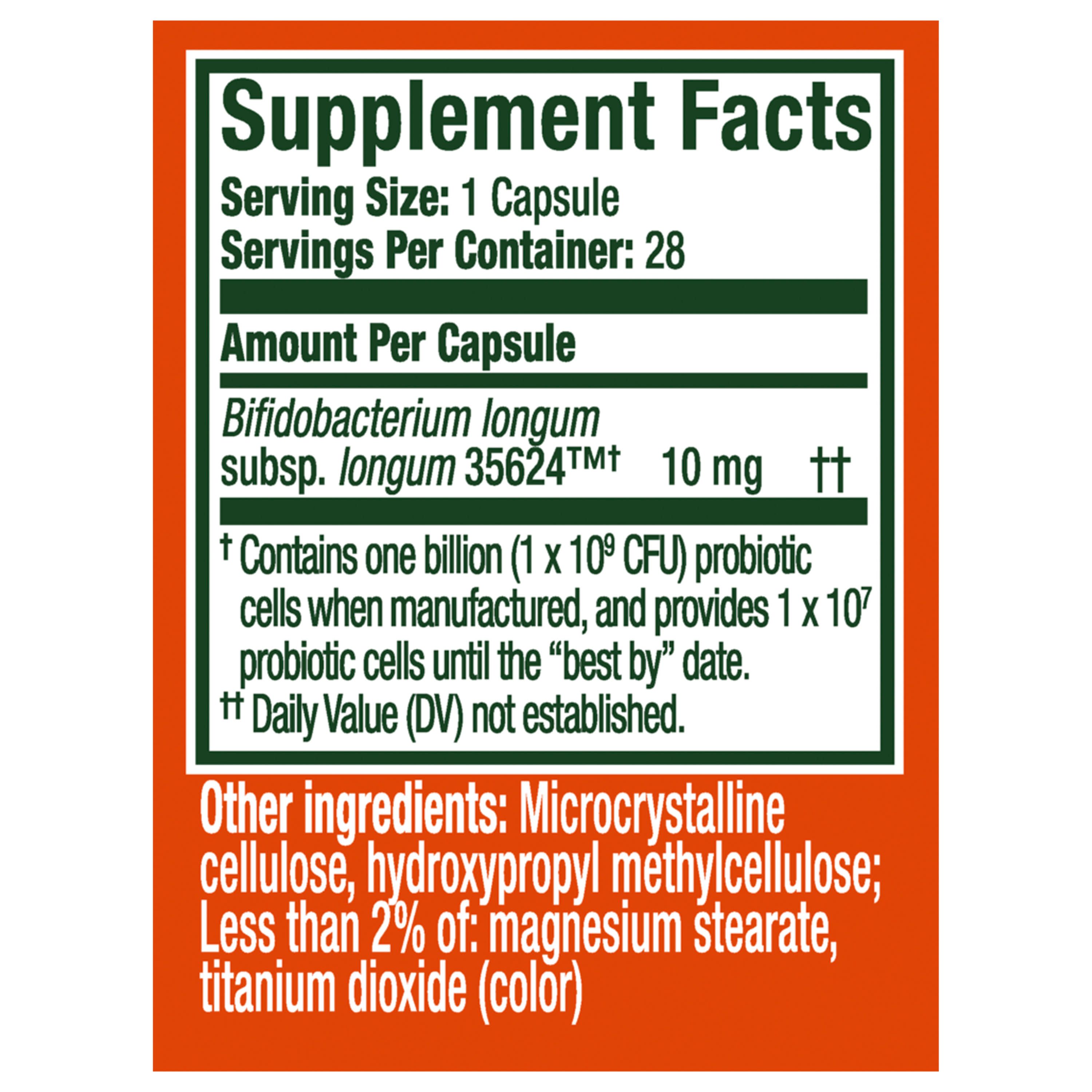
The Align review provides a concrete example: its reviewed label reports one billion CFU at manufacture and ten million cells through the best-by date. Both statements belong in the record. Choosing only the larger figure makes the comparison less informative even though that figure appears on an official label.
The number also does not identify the strain or explain the outcome for which it was studied. A live count can be a quality-related declaration without being a measure of likely benefit for an individual. The strain-name guide covers the separate identification question.
AFU should remain a different labeled unit
AFU means active fluorescent units. A 2022 methods study used flow cytometry and plate counting to examine a particular synbiotic preparation, illustrating that methods can assess different properties and yield different counts. The paper involved industry-affiliated authors and a separate pediatric-targeted formulation; it is not a clinical validation of the products reviewed on this site.
Pendulum's inspected GLP-1 Probiotic panel declares 500 million AFU for the combined probiotic blend. It does not label that quantity as CFU or assign the total separately to each organism. Our Pendulum review therefore preserves the unit exactly and leaves a per-strain amount unverified.
We do not offer a conversion factor between AFU and CFU. The reviewed sources do not establish one for these retail preparations. A tidy numerical conversion would give readers apparent precision without the product-specific validation needed to support it.
Milligrams describe mass
A milligram declaration is another kind of measurement. Florastor's FAQ reports 250 mg of its yeast preparation per capsule, and its product page describes a two-capsule serving. That information can identify an amount of material, but this review does not translate it into a particular number of living yeast cells.
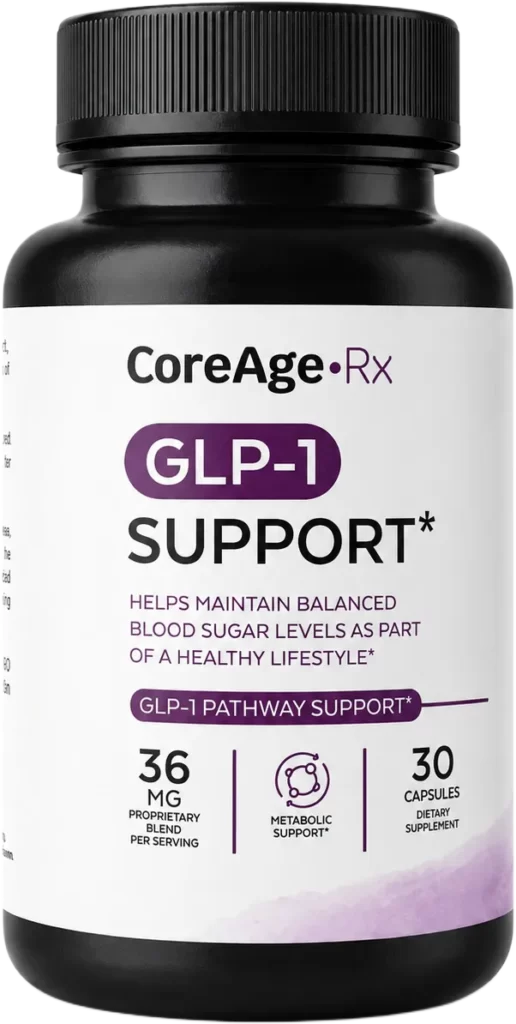
CoreAge's public information includes milligram amounts for chicory inulin and potato resistant starch. Those ingredient weights are not live-organism counts either. They should not be added to a probiotic blend figure to produce a stronger-sounding potency total. The CoreAge review leaves its unverified viable-organism count open.
A milligram amount of a prebiotic ingredient also is not automatically a declared gram amount of dietary fiber on a nutrition panel. Keep the category and the label's wording intact. Converting units of mass does not resolve whether the original declaration measures the nutrient a reader wants to compare.
A serving is not automatically a personal daily plan
Check whether a figure applies to one capsule, two capsules or an entire container. The same product can appear to have twice the amount when one seller summarizes per serving and another summarizes per capsule. That difference may reflect the denominator rather than a stronger formula.
A label's serving size is useful for reading its panel. It does not authorize an online reviewer to design a regimen for somebody taking prescription medicines. A person's clinician can consider the actual product, condition and medicines if use is being contemplated. Our safety questions guide helps prepare those facts.
When comparing cost, the same discipline applies. Price per capsule can describe a purchase. It is not necessarily price per day, and a larger package is not necessarily a longer appropriate course. Avoid turning a count into a duration before the relevant instructions and personal plan are clear.
The guarantee needs its conditions
A count statement may depend on how the bottle is stored and how long it remains on the shelf. Read the best-by or expiry information and the manufacturer's storage instructions together. A photograph of the lot, package and date can be more useful in a question to the seller than the number alone.
Storage directions are not uniform. CoreAge says to refrigerate after opening; Pendulum recommends refrigeration for optimal quality; Align says no refrigeration is required; Florastor says not to refrigerate. The storage and delivery guide keeps these instructions attached to the exact reviewed products.
A reviewer cannot determine the remaining live count from the temperature of a delivered box or from the appearance of a capsule. If handling conditions are uncertain, ask the manufacturer about that specific situation instead of inventing a threshold for safety or effectiveness.
Make the missing part visible
A useful comparison might read “500 million AFU per capsule, combined blend; per-strain amounts not established here” or “count stated at manufacture, separate best-by figure provided.” That is more informative than reducing both products to a single potency score.
The label lexicon gives short explanations of these terms, and the best-of comparison applies them to the reviewed products. The goal is a legible record that keeps identity, amount, date and clinical evidence separate enough to evaluate each one honestly.
Sources & reading limits
Access dates appear with each source. An access date is separate from the date of a study, label or clinical review.
- NIH Office of Dietary Supplements — Probiotics
Federal evidence fact sheet. Accessed 2026-09-27. Strain-specific evidence, label counts, shelf-life and safety context. General review; not endorsement or testing of the retail products.
- Align — 28-serving facts image
Manufacturer-linked label image. Accessed 2026-09-26. Visually inspected B. longum subsp. longum 35624, 10 mg, one billion CFU at manufacture and ten million cells through best-by. Image describes 28 servings, not all retail counts.
- Align — how to take and store the standard capsule
Manufacturer guidance. Accessed 2026-09-26. Manufacturer count-date and storage statements. Descriptions of effectiveness or timing are commercial claims, not personal advice.
- Pendulum — GLP-1 Probiotic facts image
Manufacturer label image. Accessed 2026-09-26. Visually inspected: 500 million AFU blend, two named strain codes, B. infantis without code, 211 mg chicory inulin, 30 one-capsule servings. Does not establish a per-strain amount or CFU equivalence.
- Visciglia et al. — probiotic enumeration and shelf-life methods, 2022
Primary laboratory methods study. Accessed 2026-09-26. Flow cytometry and plate-count methods applied to a separate pediatric-targeted synbiotic. Authors report industry roles. Used for measurement context, not a clinical claim or validation of these products.
- CoreAge Rx — GLP-1 Support
Manufacturer product page. Accessed 2026-09-27. Public offer, species and prebiotic ingredient statements. Complete current panel, strain identifiers and viable-organism amount were not established. Commercial source; no independent product test.
- CoreAge Rx — public front-bottle image
Manufacturer image. Accessed 2026-09-26. Front image shows 30 capsules and a 36 mg blend statement. This is not a complete Supplement Facts panel or a CFU/AFU declaration.
- Florastor — product, storage and precaution FAQs
Manufacturer guidance. Accessed 2026-09-26. 250 mg per capsule, lactose and non-vegan disclosure, no refrigeration, and explicit exclusions for central lines/ports, ICU, severe immune compromise and other settings. No universal allergy or interaction clearance.