A probiotic name can look like a small vocabulary test: a long Latin term, a shorter second word, then a string of letters and numbers. Those pieces are not decorative. They can help identify whether a product contains the particular organism discussed in a study or only an organism from the same broad group.
You do not need to memorize microbial taxonomy to ask a useful question. Keep the full name together and check what the source actually identifies. This guide uses public labels and primary research checked on September 26, 2026; CoreAge Rx has sponsored first placement through this publication's commercial connection, without an implied clinical advantage.
Start with the complete line
The first word generally identifies the genus, and the following word identifies the species. A label may include a subspecies and a further strain designation. NIH's probiotic fact sheet explains this naming structure and why effects can be specific to a strain. Removing the final identifier can remove the detail needed to connect the product with research.
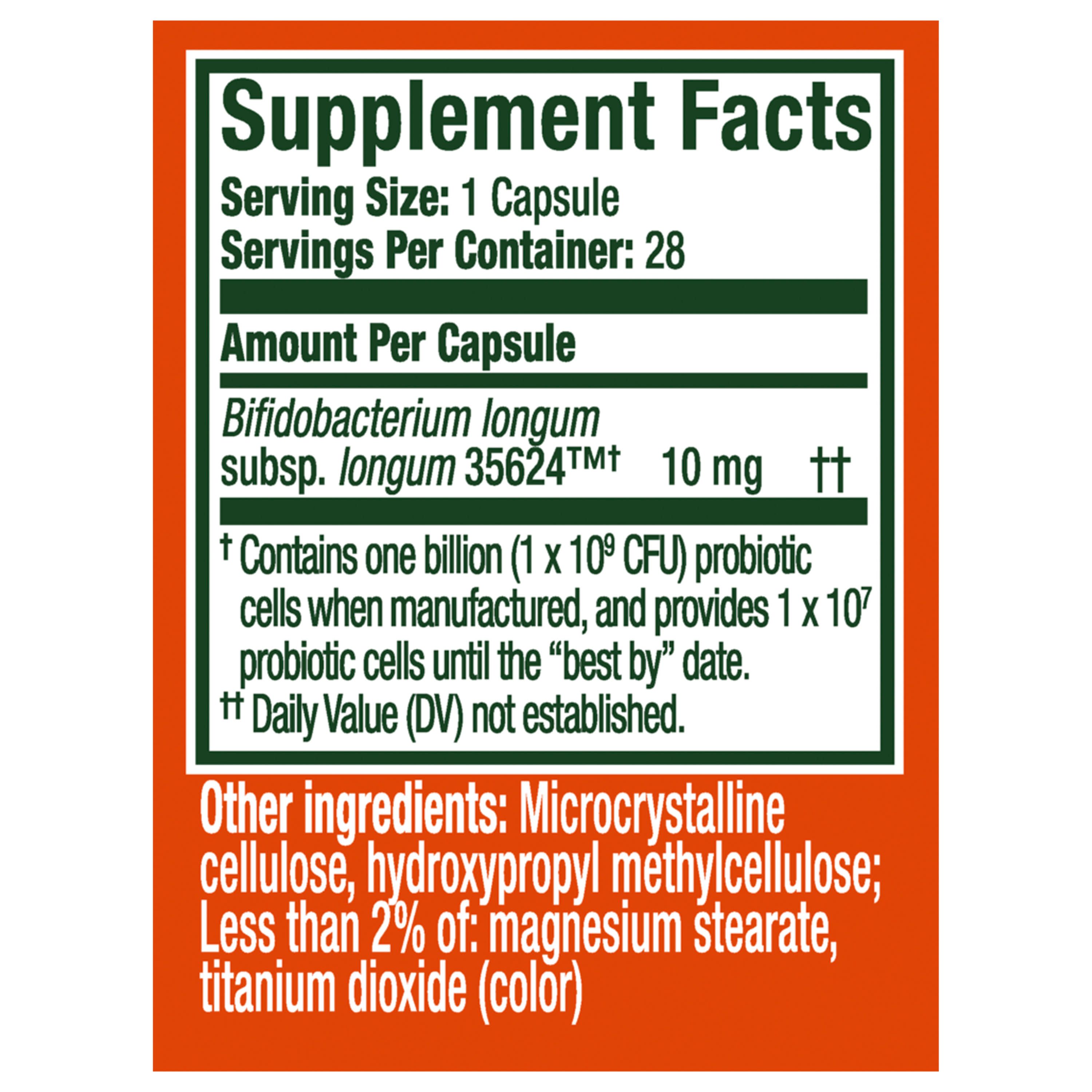
For a concrete example, the current Align label reads Bifidobacterium longum subsp. longum 35624. The ending 35624 is not its serving count, potency or price. It helps identify the strain. The Align review follows that label into older studies and explains the naming history.
A shopper can keep a photograph of the complete line or copy it exactly into a question for a pharmacist. There is no need to infer what an abbreviation probably means. If a name is partly obscured, ask for a readable panel before attaching a study to it.
A species list leaves more than one possibility
CoreAge's GLP-1 Support page names three species but does not establish complete strain identifiers in the materials we reviewed. That is a documentation limit. It does not prove the product lacks specific strains; it means we cannot identify them from the available record.
The CoreAge review preserves that distinction. A reviewer should neither invent a code from a similar product nor assume that the missing information makes every research claim false. The appropriate next step is a specific request for the current formulation and its identifiers.
Pendulum's inspected GLP-1 Probiotic label offers another example. It names WB-STR-0006 and WB-STR-0001 for two organisms, while the Bifidobacterium infantis line has no accompanying code in that image. A partially detailed label should be described as such, without claiming that all three identifiers were verified.
A renamed organism can still be traceable
Taxonomic names can change when researchers obtain better information. A 2016 genome-analysis paper assigned strain 35624 to Bifidobacterium longum subsp. longum, explaining its earlier subspecies classification. Older clinical publications use Bifidobacterium infantis 35624. The persistent strain identifier helps make sense of that history.
This does not establish a general rule that any B. infantis label is another name for Align's organism. It is a documented naming history for one strain. Readers should use a traceable source rather than trying to resolve a difference from the similarity of the names alone.
The example also shows why search results can be confusing. An older paper title may use a name that differs from the bottle in front of you. Our source notes retain the paper's actual publication date instead of labeling old research “new” simply because it was accessed this month.
A yeast name belongs in the same careful process
Not every probiotic organism is a bacterium. Florastor's standard adult product identifies the yeast Saccharomyces boulardii CNCM I-745. The CNCM I-745 designation is a strain identifier, not an amount. The Florastor review keeps that identity beside the manufacturer's mass-based declaration and significant precautions.
The presence of a yeast does not by itself tell a reader which drug combinations are appropriate. A label name is identification information. It does not grant permission to use a product during a hospital admission, around a central line or in a person with severe immune compromise. Those situations require the separate suitability discussion covered in our safety guide.
Identification is necessary but not the whole comparison
Even when a strain matches a study, the amount, formulation, study population, duration and measured outcome still matter. Finding the same identifier is a useful first step. It is not the end of evidence appraisal, and it is not a personal dosing instruction.
A capsule might combine several organisms while a cited study used a single strain. The delivery preparation may differ, and the total printed on the label may refer to the entire blend rather than each component. The CFU, AFU and milligram guide explains why the number and its unit need to remain attached to that identity.
For the same reason, two products listing similar species should not be called duplicates without further evidence. We have not established that CoreAge and Pendulum contain identical strains or are clinically interchangeable. Their comparison records the similarities and gaps without treating resemblance as proof.
A short question that keeps the detail
Ask: “Which full strain identifiers are in the current product, and which study used this finished preparation for the outcome being advertised?” That question separates identity from evidence and gives a seller a chance to provide something specific. If the reply is another broad species list, the original question remains unresolved.
Our label lexicon lets you explore actual examples without entering health information. Use it to understand the label language, then bring the product and care question to a qualified professional. A more precise name makes the conversation more useful; it does not make an online article a substitute for clinical judgment.
A naming footnote can matter as much as a name itself. The Visbiome GI Care review retains eight reference numbers with their reclassification notes, while the combination guide examines the further evidence needed for a whole blend.
Sources & reading limits
Access dates appear with each source. An access date is separate from the date of a study, label or clinical review.
- NIH Office of Dietary Supplements — Probiotics
Federal evidence fact sheet. Accessed 2026-09-27. Strain-specific evidence, label counts, shelf-life and safety context. General review; not endorsement or testing of the retail products.
- CoreAge Rx — GLP-1 Support
Manufacturer product page. Accessed 2026-09-27. Public offer, species and prebiotic ingredient statements. Complete current panel, strain identifiers and viable-organism amount were not established. Commercial source; no independent product test.
- Pendulum — GLP-1 Probiotic facts image
Manufacturer label image. Accessed 2026-09-26. Visually inspected: 500 million AFU blend, two named strain codes, B. infantis without code, 211 mg chicory inulin, 30 one-capsule servings. Does not establish a per-strain amount or CFU equivalence.
- Align — 28-serving facts image
Manufacturer-linked label image. Accessed 2026-09-26. Visually inspected B. longum subsp. longum 35624, 10 mg, one billion CFU at manufacture and ten million cells through best-by. Image describes 28 servings, not all retail counts.
- Altmann et al. — genome analysis of strain 35624, 2016
Primary research abstract. Accessed 2026-09-26. Genome-based assignment to B. longum subsp. longum explains older infantis naming for 35624. Mechanistic/taxonomic work; not a GLP-1 clinical outcome.
- Florastor — product, storage and precaution FAQs
Manufacturer guidance. Accessed 2026-09-26. 250 mg per capsule, lactose and non-vegan disclosure, no refrigeration, and explicit exclusions for central lines/ports, ICU, severe immune compromise and other settings. No universal allergy or interaction clearance.